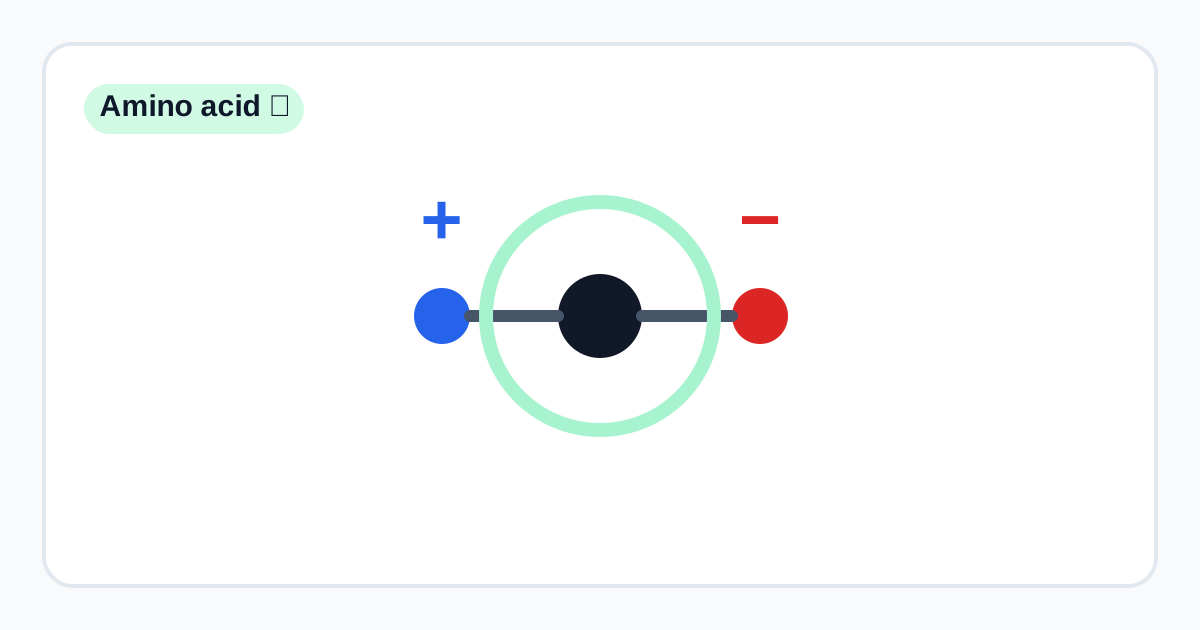
When learning amino acids through structural formulas, they are often drawn in a neutral form such as H2N-CH(R)-COOH. However, in water and at physiological pH, most amino acids do not exist exclusively in this form. Instead, the zwitterion form, in which the amino group accepts a proton to become -NH3+ and the carboxyl group loses a proton to become -COO-, becomes important.
What Is a Zwitterion?
A zwitterion is a chemical species that carries both a positive and a negative charge simultaneously within the same molecule. In an amino acid, the typical case is one in which the amino group bears a positive charge and the carboxyl group bears a negative charge. As a structural formula, it can be expressed as follows.
+H3N-CH(R)-COO-
| Notation | Form | Characteristics |
|---|---|---|
| Neutral form (as drawn in structural formulas) | H2N-CH(R)-COOH |
Often used in diagrams |
| Zwitterion form (in aqueous solution) | +H3N-CH(R)-COO- |
The dominant form at physiological pH |
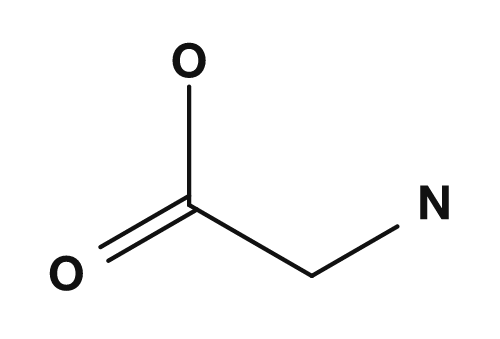
In this structure, since the positive and negative charges balance out across the whole molecule, the net charge can be zero. However, what is important is that this does not mean there are no charges at all; rather, the molecule carries both charges internally.
Why Amino Acids Become Zwitterions
Why are amino acids prone to becoming zwitterions? The reason lies in the acid–base properties of the amino and carboxyl groups.
- The carboxyl group is a functional group that easily releases a proton as an acid.
- The amino group is a functional group that easily accepts a proton as a base.
As a result, a proton transfer occurs within the same molecule, and the form in which the carboxyl group becomes -COO- and the amino group becomes -NH3+ is stable.
PubChem describes the L-cysteinylglycine zwitterion as arising from a proton transfer from the hydroxyl group to the amino group, and indicates that it is the dominant microspecies at pH 7.3. This is helpful for understanding that amino acids and peptides in water tend to exist as charged structures rather than as simple neutral structures.
Effects of Zwitterions on Physical Properties
The presence of zwitterions also affects the physical properties of amino acids. Despite being small organic molecules, amino acids can have relatively high melting points. This is because ionic interactions operate between molecules. They also interact readily with water, and their charge state in aqueous solution changes with pH.
Relationship with the Isoelectric Point
Understanding zwitterions also makes the isoelectric point easier to grasp. At the isoelectric point, the net charge of the molecule becomes zero, but this does not mean there is no charge. In many cases, the molecule carries both positive and negative charges that are balanced. A paper on PMC defines the pI of a protein as the pH at which the net charge is zero, and explains that the protein is positively charged at pH below pI and negatively charged at pH above pI.
pH and Changes in Charge State
When considering the zwitterion of an amino acid via a structural formula, you also need to be aware of the effect of pH.
| pH condition | Carboxyl group | Amino group | Overall charge |
|---|---|---|---|
| Strongly acidic | -COOH |
-NH3+ |
Positive |
| Intermediate (near isoelectric point) | -COO- |
-NH3+ |
0 (zwitterion) |
| Strongly basic | -COO- |
-NH2 |
Negative |
The zwitterion is also the reason why amino acids cannot simply be treated as "neutral molecules". Even when drawn as H2N-CH(R)-COOH in a structural formula, in actual aqueous solution one must consider forms such as +H3N-CH(R)-COO-. Understanding this difference is helpful when learning about solubility, isoelectric point, electrophoresis, and the surface charge of proteins.
Summary
An amino acid zwitterion is a form in which the same molecule carries both positive and negative charges simultaneously. Because the amino group becomes -NH3+ and the carboxyl group becomes -COO-, charges exist within the molecule even when the net charge is zero. The concept of the zwitterion is important for understanding the physical properties of amino acids, the isoelectric point, and the charge of proteins.